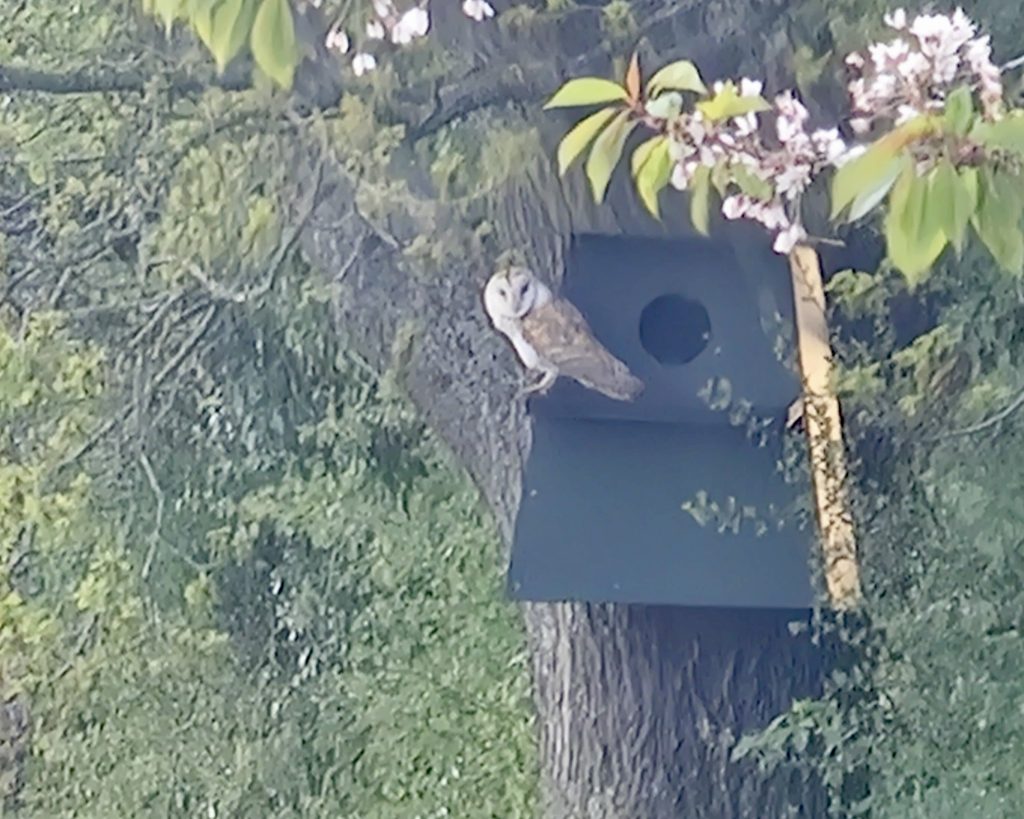
The farm
Natural Progress > About > The farm
Location
We’re situated in the heart of the Chiltern Hills, in Speen, Buckinghamshire – a 10 minute drive from High Wycombe. We’re within the Chilterns National Landscape and we manage around 40 acres – mainly permanent pasture with 6 acres of ancient beech woodland.
We moved here in 2024 and have focused on long term areas first – putting in perimeter stock fencing, planting a new mixed fruit orchard, and planting trees to create silvopasture systems. We’ve worked with Defra’s Farming in Protected Landscapes (FiPL) scheme which has helped subsidise some of the initial costs for fencing, trees and hedgerows.
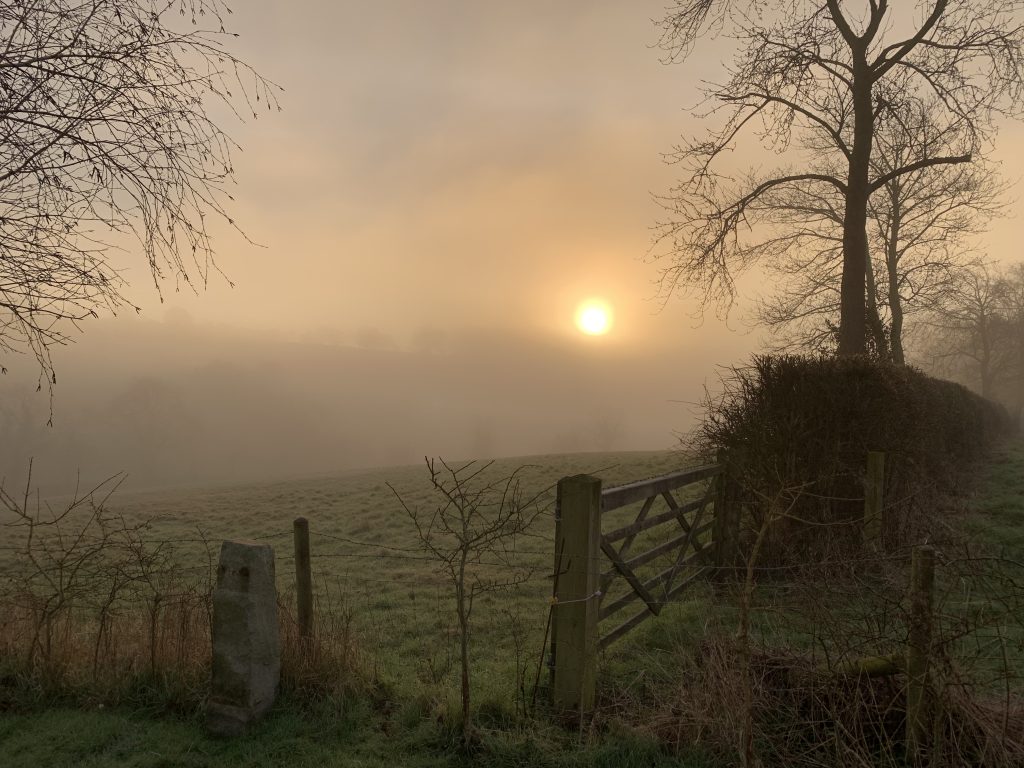
Chickens
We keep laying hens who provide us with eggs for our subscription product sales. The chickens are all pasture-raised, spending all their daylight time outside. We raise many of the hens from eggs we hatch ourselves, but we’ll also buy-in some chicks and point-of-lay hens to add specific breeds or new genetics.
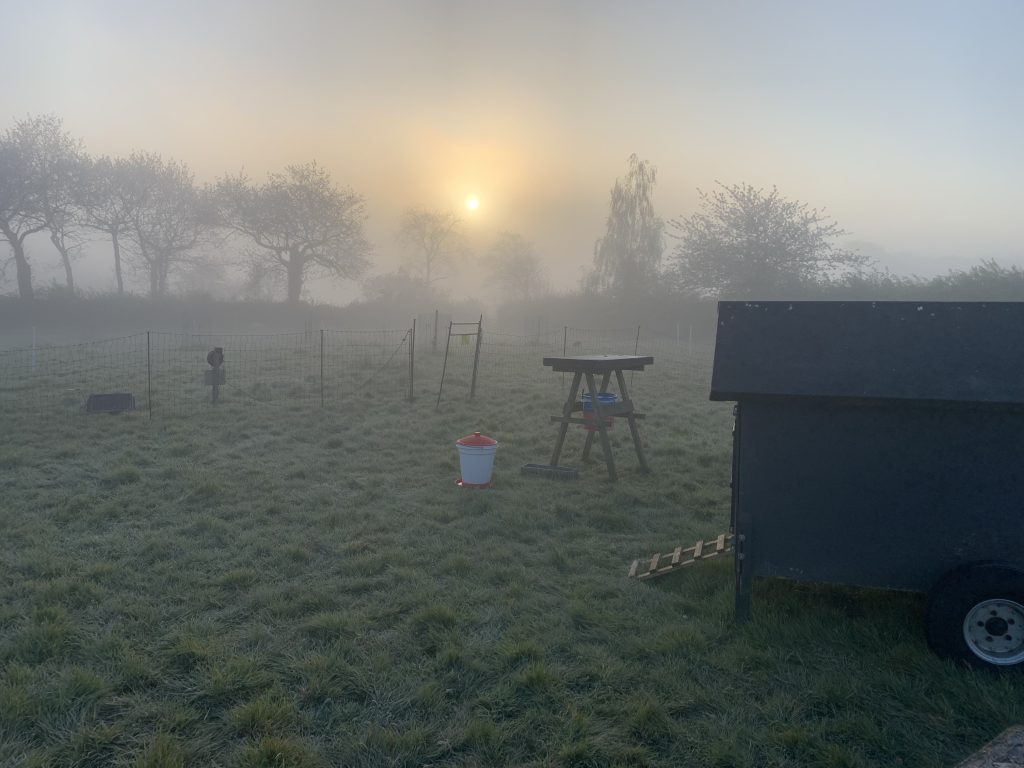
Most of the chickens are based in and around the egg mobile – a mobile unit that allows us to move the hens on to fresh pasture with the lanes of the orchard every few days. The egg mobile has a steel mesh floor so that poo drops through to fertilise the ground below. It has a solar panel mounted on the back to generate power for the automatic trapdoor and to power the electric poultry netting that protects the hens from foxes.
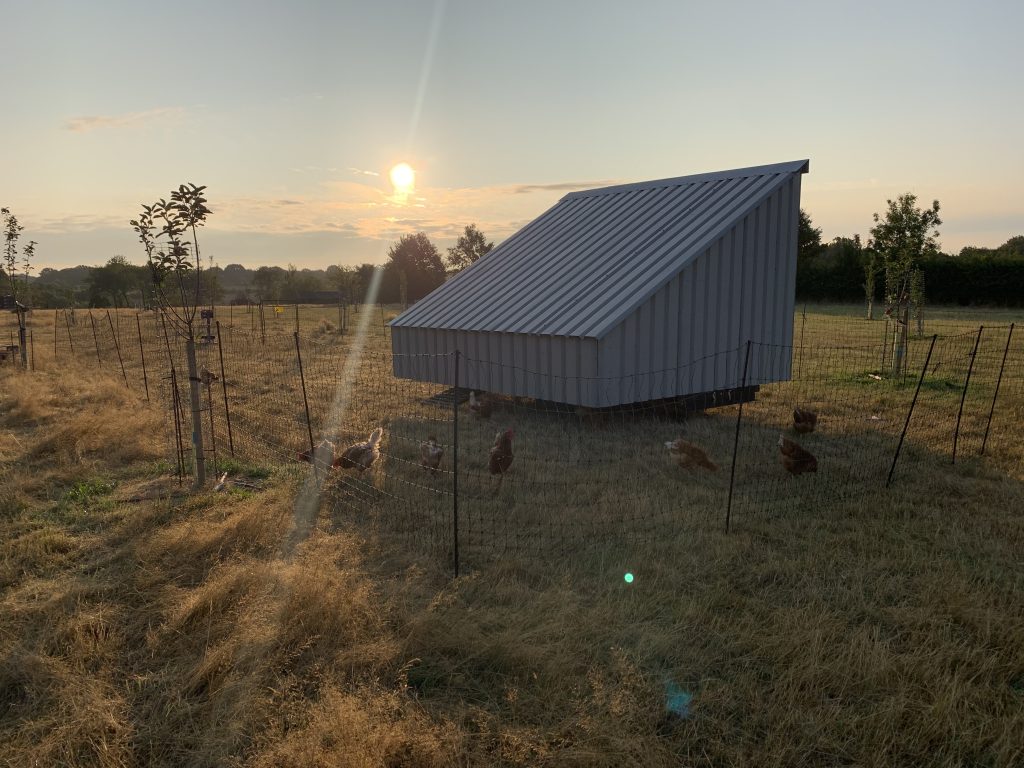
All the housing have automatic doors that close after dusk and open automatically in the morning. This saves a lot of effort and allows them to put themselves to bed. The hens use the egg mobile for two purposes only – laying eggs in the next boxes, and roosting at night. The rest of the time they spend outside foraging.
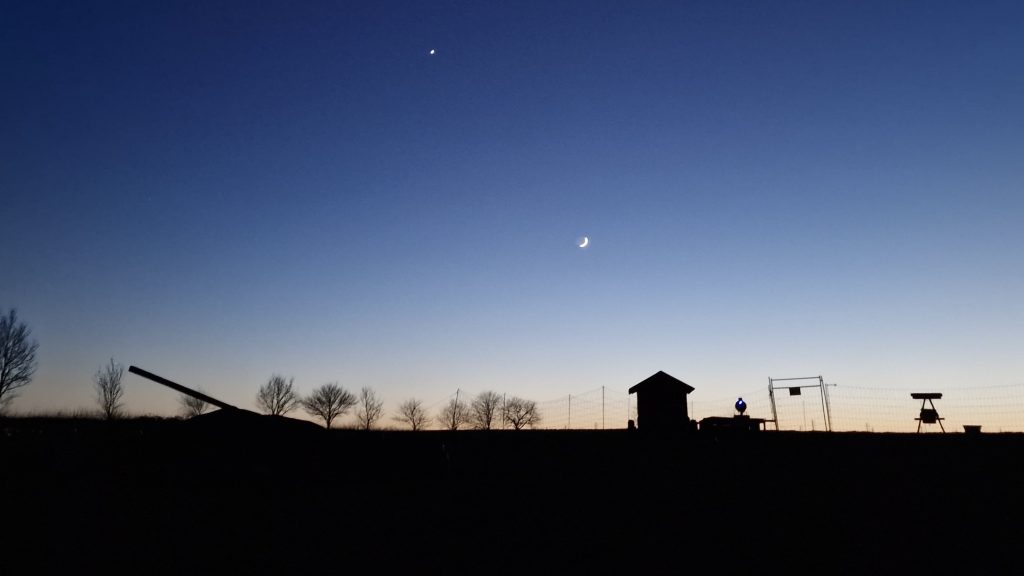
Orchard
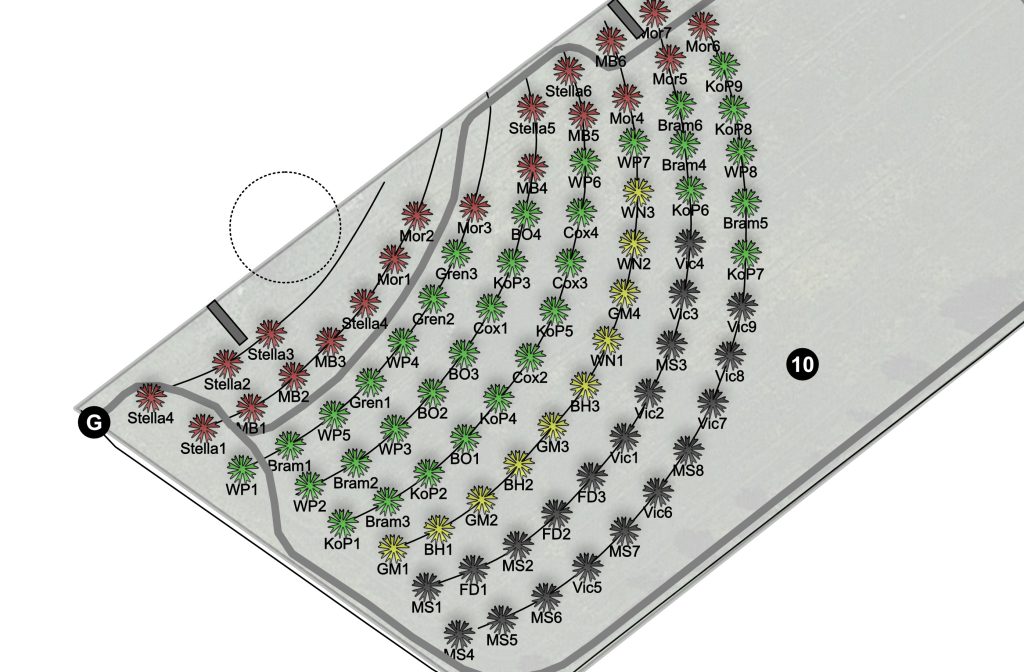
The orchard was planted in 2025 and extended in 2026. We planted a mix of cherries, apples, pears and plums – with the following varieties:
- Cherry: Stella, Merton Bigarreau, Morello;
- Apple: Bramley, Worcester Pearmian, Blenheim Orange, Grenadier, Cox’s Orange Pippin, King of the Pippins;
- Pear: Glou Morceau, Beurre Hardy, Winter Nellis;
- Plum: Marjories Seedling, Farleigh Damson, Victoria.
The design we used placed the trees roughly on contour, in lanes around 10 metres wide so we can run the egg mobile through them. We’re very happy with the curved lanes – the trees feel like they’re randomly spaced unless you’re actually within one of the lanes looking along the curve.
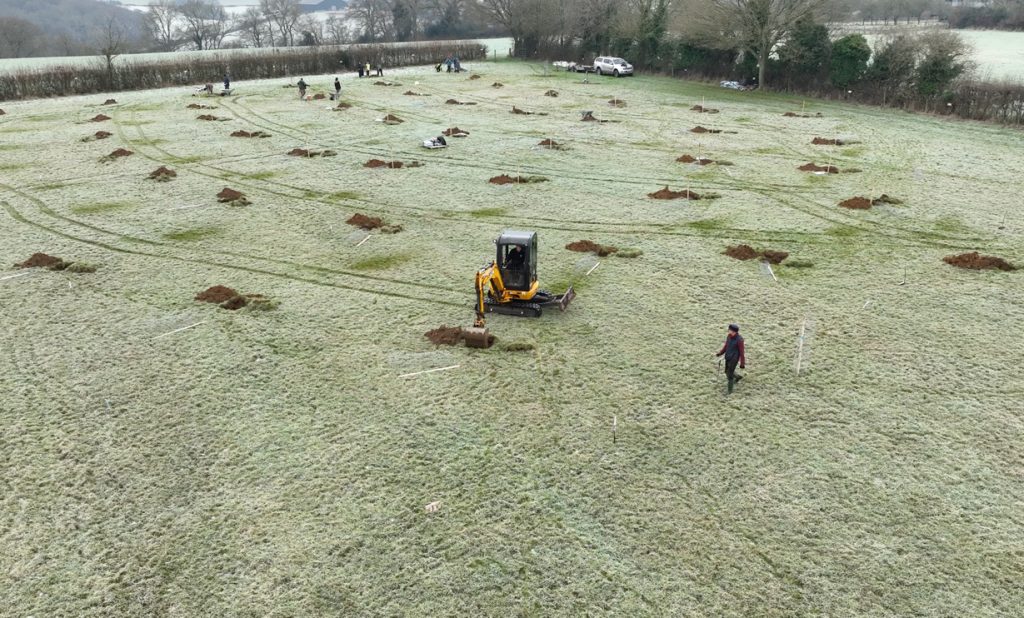
The soil here is a mix of flint and clay. It’s really hard to dig, so we had to use an excavator to dig the holes. The turf was first removed, the hole dug, then the turf placed back in the bottom of the hole upside down. The topsoil on the turf is then available for the roots to get stuck into. Before backfilling we add a cup of Mycorrhizal fungi to help colonise the roots, then backfill, adding a bag or two of compost to improve the soil.
We want to graze sheep in and amongst the trees, so it’s important to provide protection for the trees. Sheep (and deer) will strip the bark from young trees or use them as scratching posts – either way the tree will die. So we protect them using cactus tree guards – spiked galvanised mesh tree protectors that prevent the sheep from getting to the young shoots.
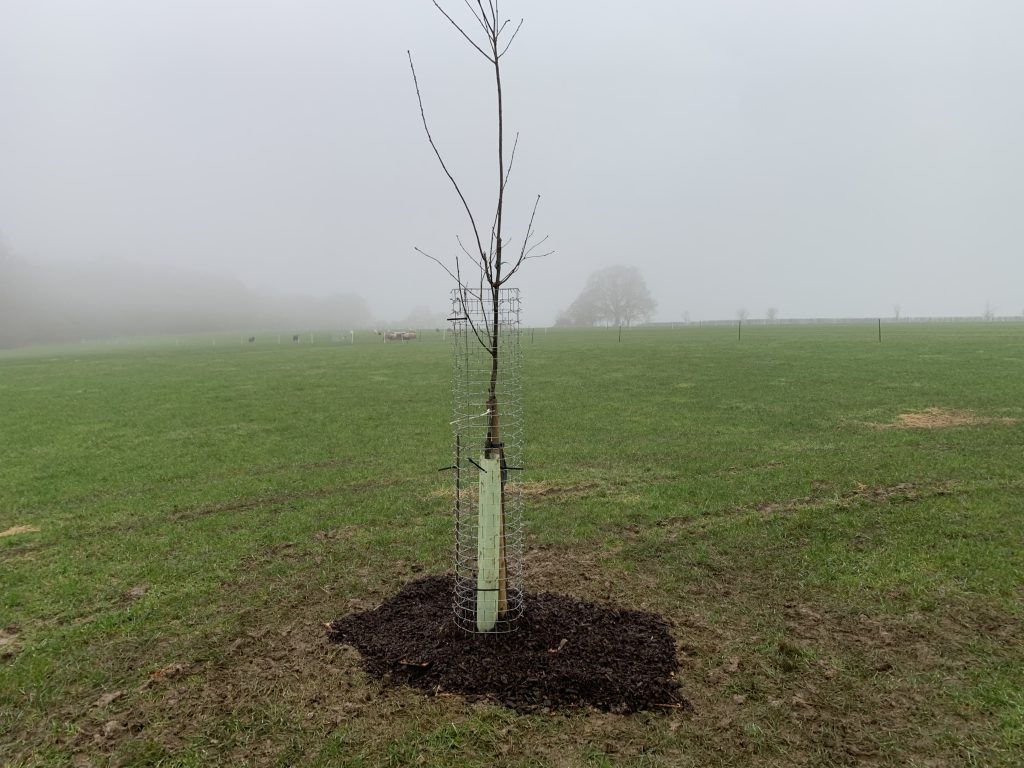
We mulch heavily around the trees using hay, woodchip or waste wool. This suppresses weeds and grass, and reduces moisture loss through evaporation. It makes a massive difference compared to leaving bare soil or grass. The mulch also rots down over time and adds nutrients to the soil.
Although the trees are situated near the top of the hill, there’s a cap of clay in this are so the ground does tend to hold water. The trees have done well so far (despite two extremely hot and dry summers) with very few losses. We’re hoping the tree roots will help with drainage in the winter too.
Bees
We’ve been beekeeping for about 10 years and we manage around a dozen beehives on site. Bees are amazing – the more we learn about them the more fascinating they are!
Beekeeping follows a yearly seasonal pattern. In the winter months the colonies are kept ticking over by ‘winter bees’ who live for around 6 months. They sustain themselves on the stored honey within the hive, forming a tight cluster when the weather is really cold. They keep the centre of the cluster warm by vibrating their flight muscles. On warm sunny days they may leave the hive for ‘cleansing flights’ (to have a poo!), but as there’s not forage around to harvest they’ll stay put.
From around February the queen will start laying eggs in order to start building up the size of the colony ready for the new year.
April marks the start of more active beekeeping when it becomes warm enough to open the hives to check them and carry out any interventions. We’ll check how the colony is growing and keep records to track from one inspection to the next. We’ll aim to inspect colonies around once every 7-10 days. As well as checking overall health we’re looking for any signs of swarm preparation.
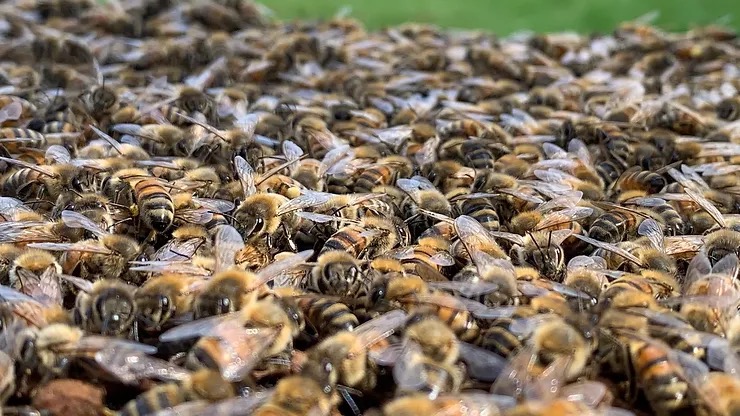
Swarming is how a colony reproduces. First, the colony will raise queen cells. After a couple of weeks, the queen cells will be sealed over with wax, and the colony gets ready to swarm. When they swarm, around two-thirds of the colony will leave the hive, along with the queen and take to the skies. They’ll land not too far from the hive and form a cluster – typically in a bush or on a tree branch. They’ll check they have sufficient numbers and if so, send our scout bees to try and find a new home. When the scout bees find suitable candidates, they’ll go through a democratic process of selecting the one they like best. Then, all at once the swarm takes off again, and moves into their new home.
As beekeepers, we want to manage the swarm process – otherwise we lose a lot of bees and our honey harvest suffers. So, if we see signs of swarm preparation (creation of queen cells) we’ll intervene, carry out an artificial swarm and create a second colony within our apiary, rather than losing them.
The swarm season is usually around May-June and it’s a busy time. As well as inspections and swarm control, we’ll also be called out to go and collect swarms from members of the public who have swarm clusters in their gardens, on fences, on cars – you name it, we’ve seen it!
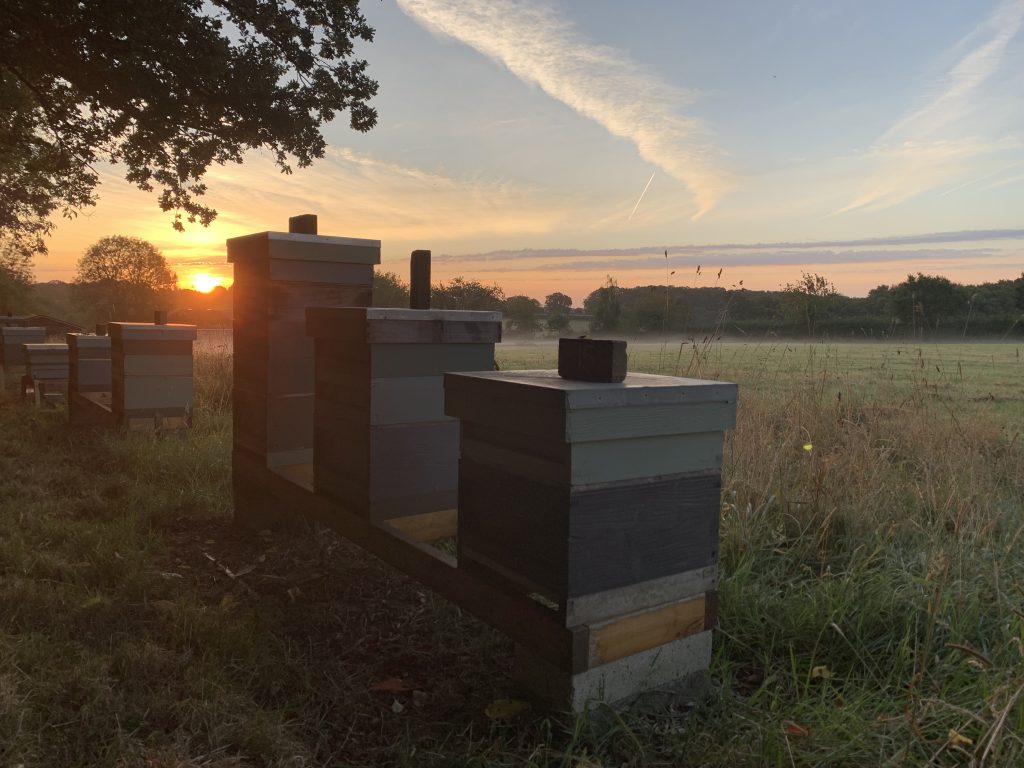
As we get into summer, the population within the hives peaks and the bees will be actively foraging, bringing back nectar, pollen and propolis to the hive. They’ll also bring back water which they’ll use to keep the hive cool in hot weather. We’ll manage the hives adding additional boxes known as ‘supers’ so the bees can store more honey.
In August / early September we’ll harvest honey – but we only take what the bees don’t need themselves. Rather than feeding them sugar as is normally done, we’ll leave sufficient honey for the colony’s needs to get them through the winter.
In the autumn the colony populations reduces and we’ll prepare the hives for winter. We’ll carry out final inspections, unite any colonies that look too small to make it through the winter by themselves, and we’ll then wrap and insulate the hives against the winter weather. A modern beehive has thin walls so this extra protection is designed to more closely replicate the natural environment in a hollow tree where the colony is protected by several inches of tree!
Hedgerows
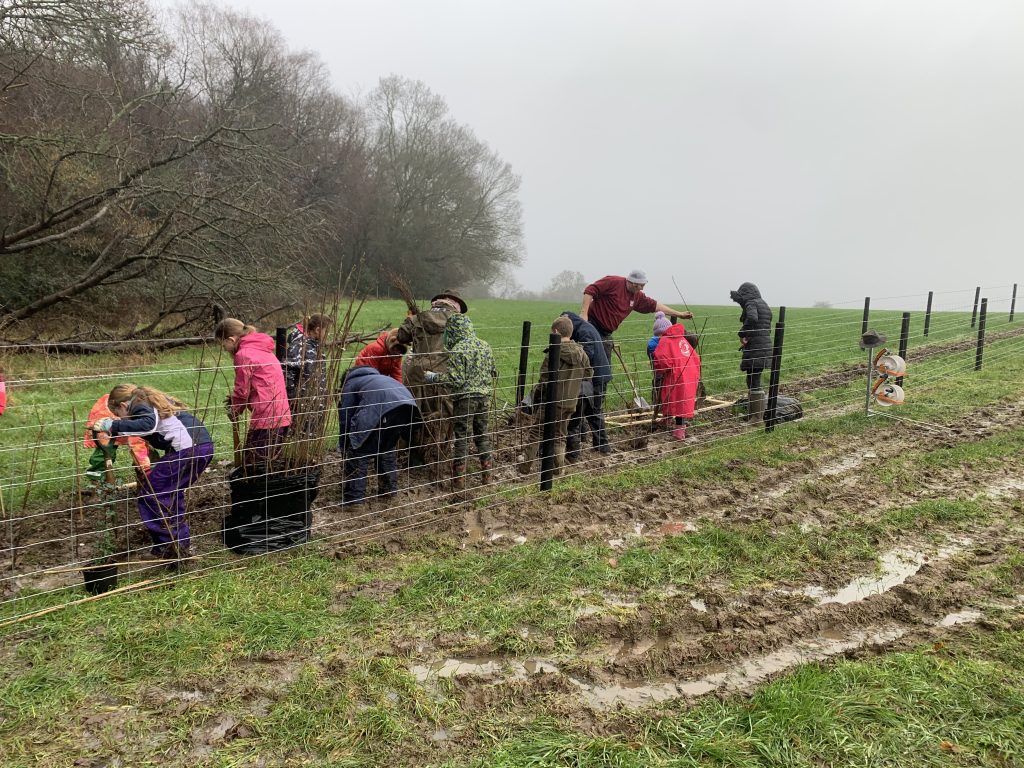
A new hedgerow was planted in 2026. It’s compliant with the Defra BN11 spec with two staggered rows of whips planted between two lines of stock fencing. The fencing protects the whips from browsing by deer and sheep.
Planting took place in cold, muddy conditions in the middle of winter when the plants are dormant. We had volunteer planting parties from local schools and scout groups – and were supported by Chiltern Rangers volunteer days.
Sheep
Our sheep and predominently Zwartbles or Zwartble crosses with some Charollais and Hampshire Down mixed in.
We mange the sheep at low stocking densities using a system of adaptive grazing. This involves rotating the sheep across different pastures, limiting their range with temporary electric fencing. Once they’ve grazed a section down hard, we move them to the next. This approach benefits both the sheep and the pastures which have plenty of time to recover undisturbed before they are grazed again.
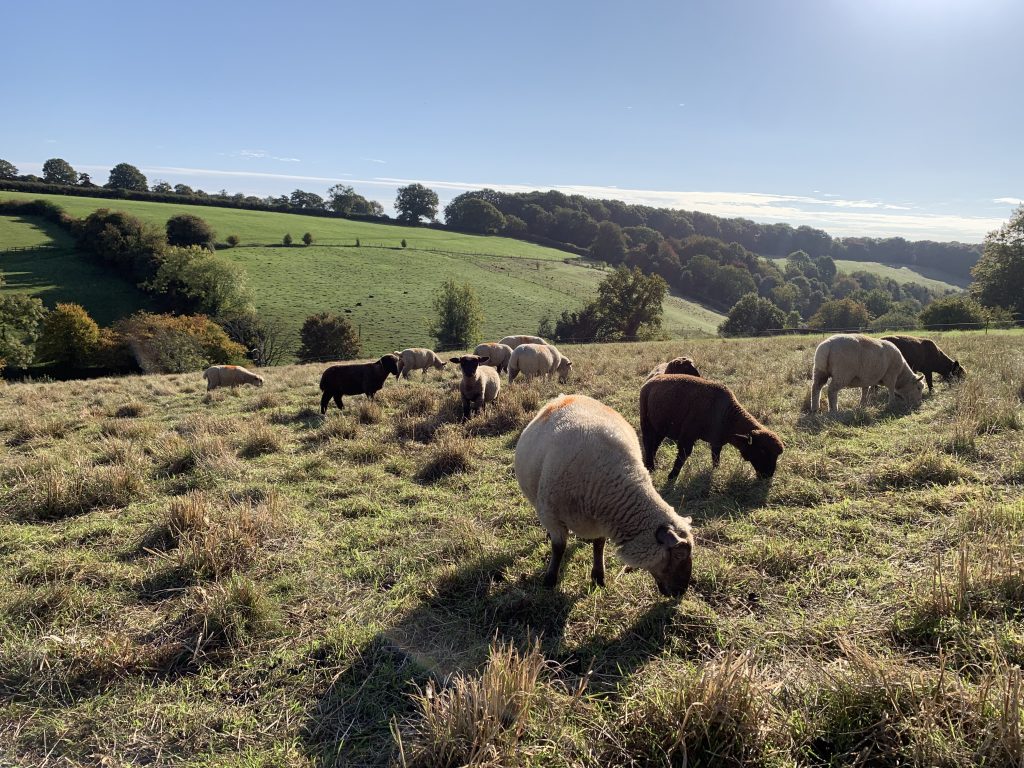
We don’t use any herbicides or pesticides, and we don’t use artificial fertilisers, so they have a natural diet of grass, herbs and forage. We manually pull persistent weeds like thistle and dock in the summer, before the seed sets to keep them in check.
Around November time we’ll introduce the ram to the breeding ewes. The ram wears a ‘raddle’ with a coloured marker pad so we can see which ewes were served when. This helps us predict the timings for lambing in the spring.
During winter, when the ewes are pregnant, we supplement their diet with hay and concentrates (pellets), as the available grass is limited. We also ensure they have both mineral licks and high energy licks available to keep them in good condition. This is especially important for ewes carrying twins and triplets.
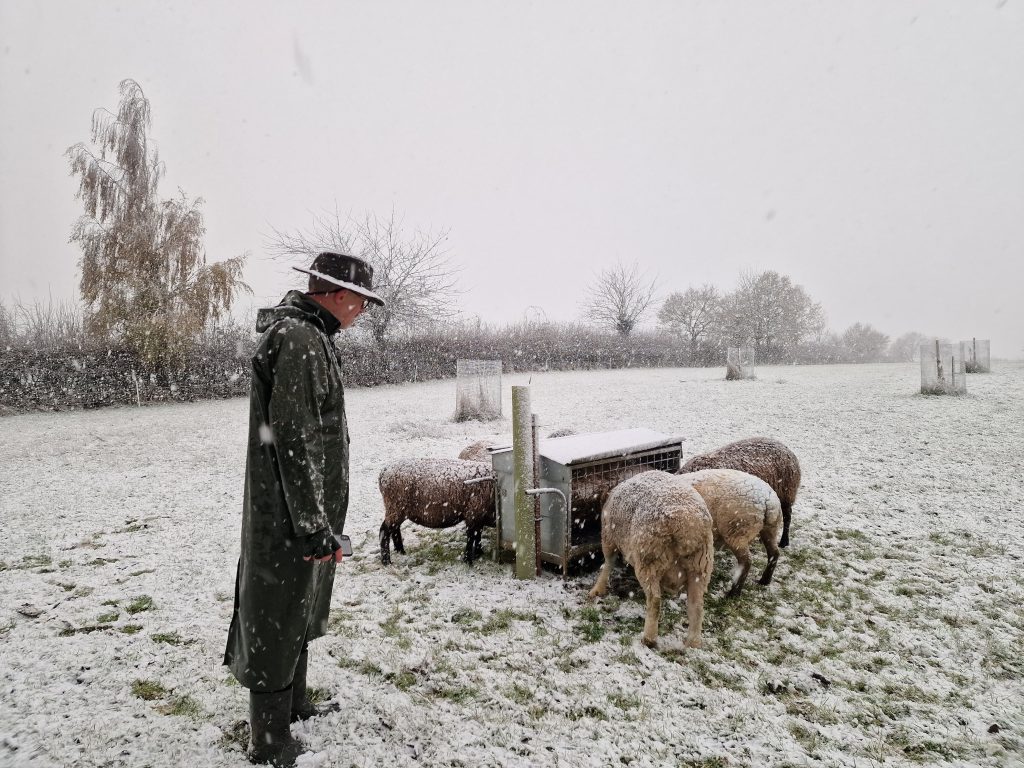
The gestation period is about 145 days so that means lambing starts around the end of March early April. This is an intensive time with not much sleep – but it’s also very rewarding. The young lambs are just a joy to watch! If the ewe has triplets, one will sometimes get rejected, so we’ll take them and either try and re-assign them to another ewe with a single, or alternatively bottle-feed them by hand. Forrest was our first ever bottle-fed lamb (secretly we’re hoping for lots more bottle-fed lambs in the future!).
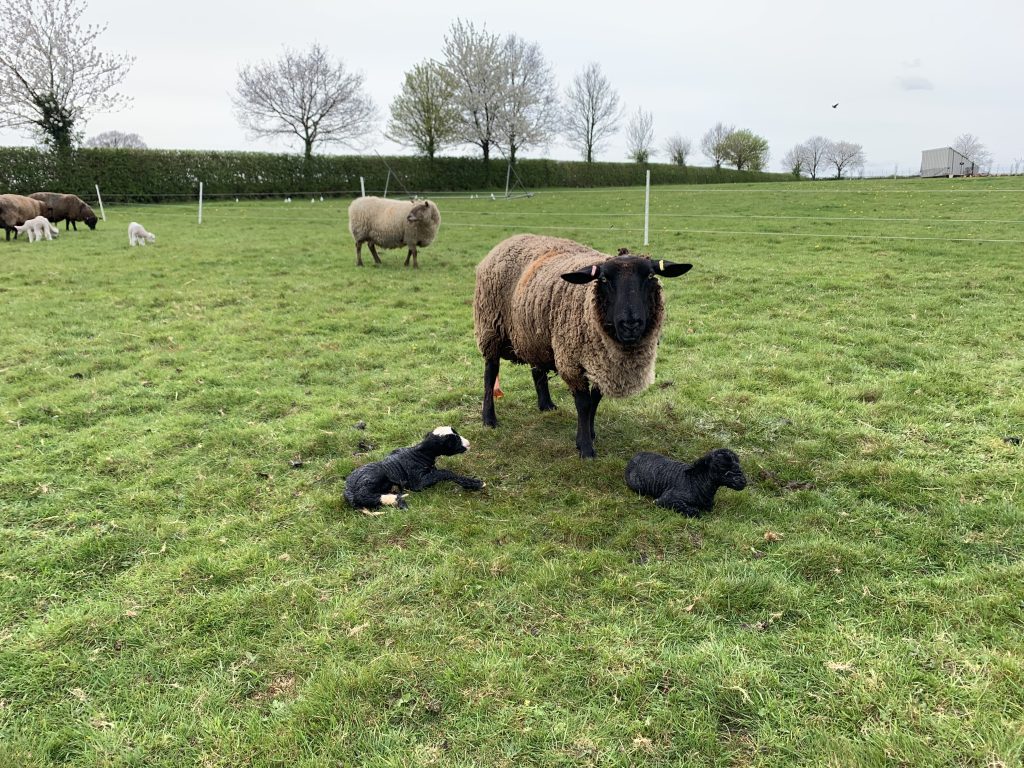
In the summer we wean the lambs, separating from their mothers. The ewes then get a few months of rest and relaxation to get their condition back before the cycle starts again.
Woodland
Our private, ancient beech woodland offers a peaceful, secluded setting on a southwest facing slope. We have a mix of mature trees, dense undergrowth, and natural clearings.
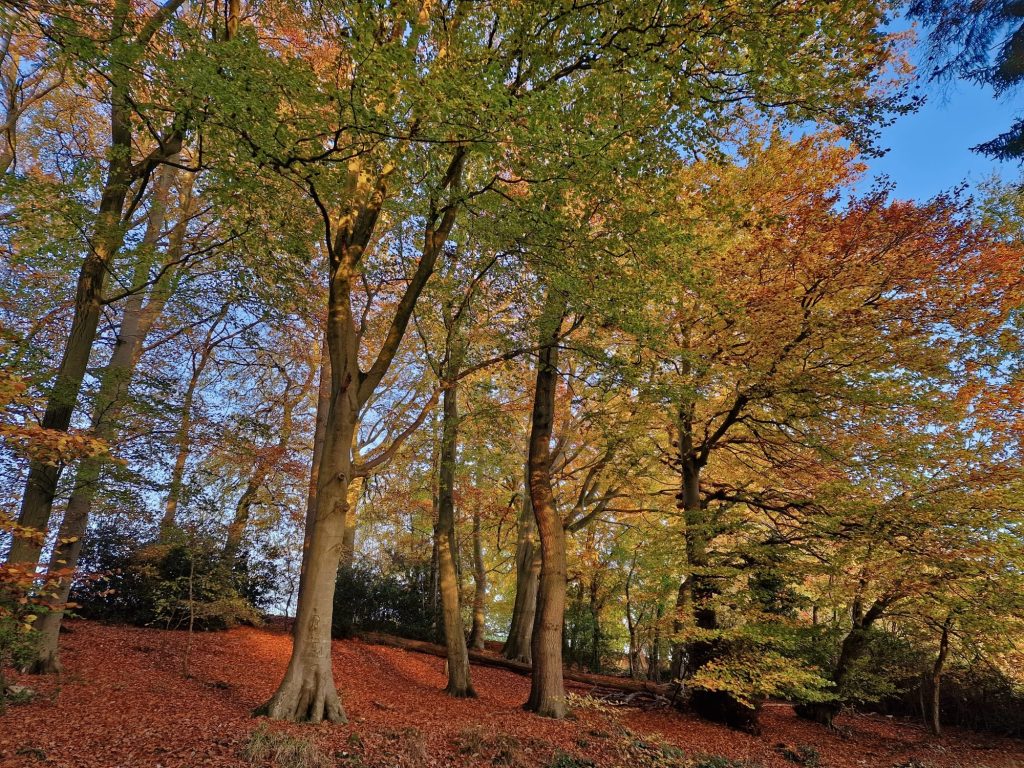
The mature beech trees reach impressive heights creating a cathedral-like feeling with the canopy high above.
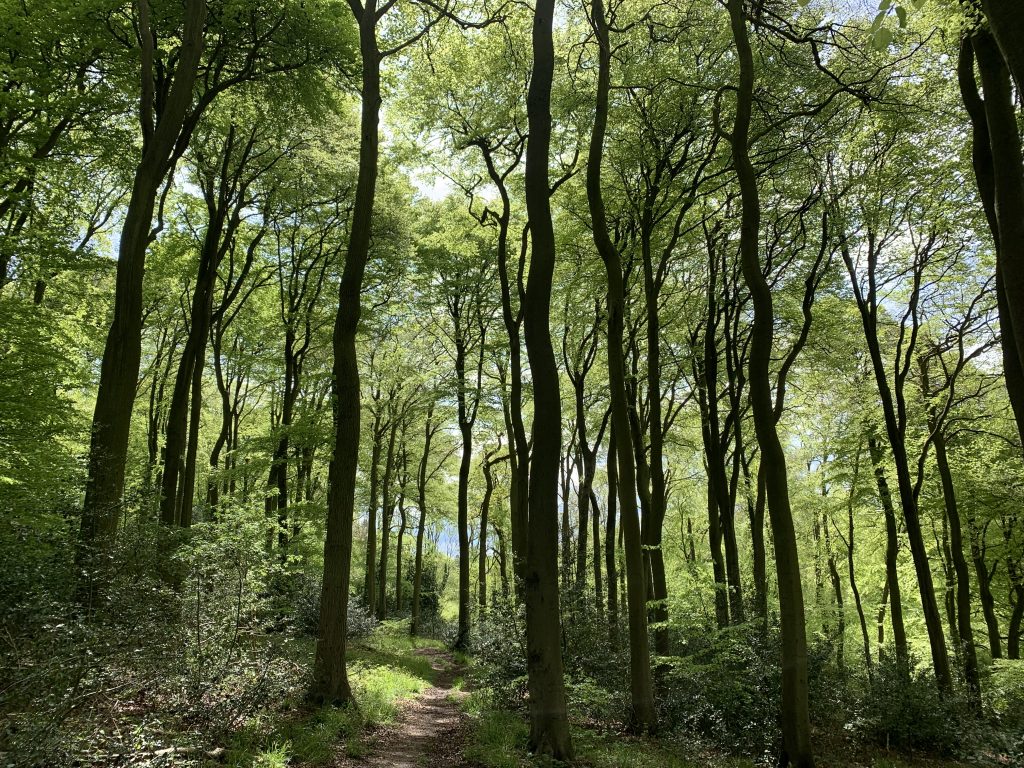
Regular management tasks include clearing some of the holly which otherwise spreads and dominates, felling any dead or dying trees, and planting new saplings.
We have some stands of Hazel which we have started coppicing. Coppicing is a traditional woodland management technique which involves cutting a tree – almost to ground level. New shoots will then sprout from the stump left behind. These shoots are cut when they reach the desired size for weaving, splitting, use as poles, or firewood.
We use the woodland for some of our events and our social enterprise programmes – it’s a perfect environment for reconnecting with nature.
Wildlife
We’ve been building and extending wildlife habitats by reducing the frequency of hedge cutting, building dead hedges, installing owl boxes, creating wildlife corridors, allowing our grassland to seed naturally, and avoiding use of any herbicides or pesticides.
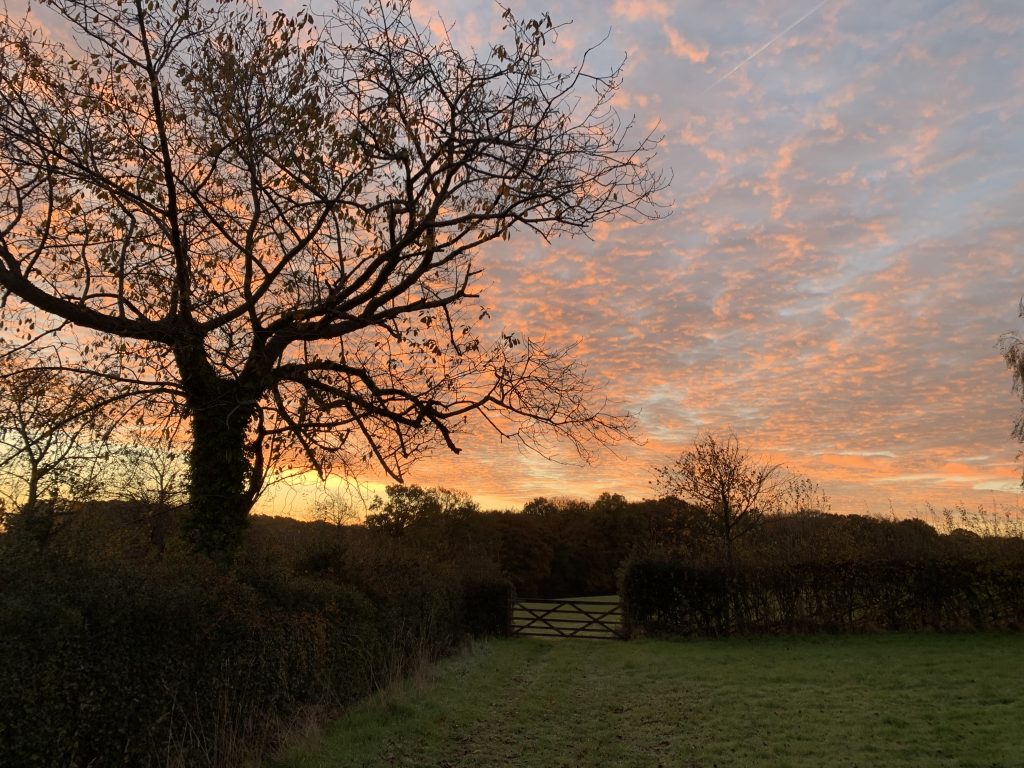
We have a rich variety of wildlife including foxes, badgers, red kites, barn owls, tawny owls, roe deer and muntjac deer.